Atisco LTD
We are a dynamic and growing organization dedicated to excellence in semiconductor technology. Whether you're an experienced professional or just starting your career, we offer opportunities to grow, learn, and make an impact.
We Are Training and hiring individuals
We are a forward-thinking company dedicated to solving one of the semiconductor industry’s biggest challenges: the growing skills gap. As technology accelerates, the demand for qualified professionals in engineering, material science, physics, and cleanroom operations continues to outpace supply. At Atisco Ltd, we don’t just fill positions—we build careers, develop expertise, and power the future of semiconductor innovation.
Whether you are just starting your journey or looking to advance your career, we provide the training, experience, and opportunities you need to succeed in this fast-paced, high-impact industry.
24/7 Need Of Inquries ?
+81 570 064 259
Apply To Be For Our Training
- Required Fields
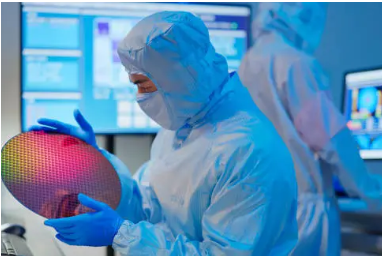
Our Mission
To bridge the gap between talent and the semiconductor industry by providing world-class training, hands-on experience, and direct pathways to meaningful employment. We believe that the right training transforms potential into performance.
Who We Are Looking For
We are currently expanding and have a large number of vacancies available. We welcome:
Experienced professionals ready to take the next step
New recruiters eager to learn and grow with us
Recent graduates in engineering, physics, materials science, and related fields
Career changers with transferable skills and a strong work ethic
Spots are limited. We encourage serious candidates to apply promptly.
Key Factors That Set Us Apart
1. Industry-Relevant Training
Our training programs are designed by industry experts and focused on the exact skills semiconductor companies need today—from VLSI design to cleanroom protocols, from SPC/DOE to equipment troubleshooting.
2. Hands-On Experience
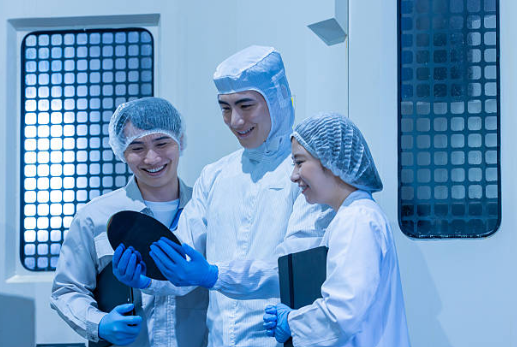
We believe in learning by doing. Our trainees work with real tools, real processes, and real problems. You don't just study theory—you apply it.
3. Direct Path to Employment
We don't train and leave you searching. Our process is designed to transition you directly into roles with our partner companies or within Atisco Ltd itself.
4. Focus on High-Demand Roles
We prioritize the five semiconductor roles that control yield, performance, and delivery:
Process Engineer,
Design Engineer,
Test Engineer,
Equipment Engineer,
Materials Scientist.
How Atisco Ltd Grows
Our growth is built on three pillars:
1. Partnering With Industry Leaders
We work closely with semiconductor manufacturers, equipment suppliers, and R&D labs to ensure our training aligns with current and future industry needs.
2. Investing in Our Trainees
Every person who completes our program becomes part of our network. Their success fuels our reputation, which brings more opportunities and more partners.
3. Continuous Improvement
We constantly update our curriculum based on feedback from employers, advances in technology, and emerging industry trends. Data-driven maintenance, automation, and new materials like silicon carbide and gallium nitride are already part of our training roadmap.
Why We Train
The semiconductor industry is evolving faster than the education system can keep up. Universities teach fundamentals, but they rarely provide hands-on experience with the specific tools, processes, and quality standards used in real fabs. We exist to fill that gap.
Our training solves real problems:
For individuals: You gain marketable skills, real experience, and a clear career path.
For employers: They get job-ready professionals who can contribute from day one.
For the industry: We help reduce the talent shortage and accelerate innovation.
We don’t just recruit. We develop. We don’t just hire. We invest.
Getting Experience With Us
hen you gain experience with Atisco Ltd, you get more than just a training certificate—you get real hands-on work with actual semiconductor tools and processes, mastery of industry-critical skills from VLSI design to equipment troubleshooting, a deep understanding of materials and device physics, essential soft skills like problem-solving and collaboration, and a direct pathway into a meaningful role with ongoing support and career growth. We don't just teach you—we prepare you to succeed from day one.
1. Hands-On Technical Training
You'll work directly with real semiconductor tools and processes—lithography, etch, deposition, CMP, and cleanroom protocols—not just textbooks.
2. Industry-Relevant Skills
Master VLSI design, CAD tools (Cadence/Synopsys), hardware description languages (Verilog/VHDL), and data analysis (SPC, DOE, JMP, Python/C++).
3. Equipment & Troubleshooting Experience
Learn to maintain and troubleshoot manufacturing machinery—vacuum systems, robotics, electrical/mechanical systems—so you're ready for real fab environments.
4. Material Science & Device Physics
Understand semiconductor materials (silicon, silicon carbide, gallium nitride), device physics, and failure analysis techniques like XRD, SEM, and AFM.
5. Soft Skills Development
Build critical skills in problem-solving, cross-functional collaboration, adaptability, and clear communication across shifts, sites, and teams.
6. Direct Path to Employment
After training, you're placed into a role with ongoing mentorship, career advancement opportunities, and access to our network of industry partners.
Our Partners
At Atisco Ltd, we solve the semiconductor industry's biggest challenge: the talent gap. We train job-ready professionals in engineering, material science, physics, cleanroom operations, VLSI design, process control, and data analysis—giving them hands-on experience with real tools and processes. We're looking for partners who need skilled talent and can provide opportunities for our graduates to train and work alongside your teams. Together, we close the skills gap, accelerate your production, and build the future of semiconductor manufacturing.





The 5 In-Demand Semiconductor Roles We're Hiring For
We are prioritizing five critical roles that control yield, performance, and delivery.
1. Semiconductor Process Engineer
What You’ll Do:
Build and refine wafer processes that turn raw materials into working devices. Work across lithography, etch, deposition, and CMP—spending time in the fab close to the tools.
Required Skills & Background:
Degree in physics, chemistry, materials science, or electrical engineering
Experience in cleanroom environments with exposure to one or more process modules
Strong data skills: SPC, DOE, and root cause analysis
Clear communication with operators, equipment engineers, and yield teams
2. Semiconductor Design Engineer
What You’ll Do:
Turn product requirements into manufacturable integrated circuits. Define architectures, create schematics, write HDL, and work with layout and verification teams to reach tape-out.
Required Skills & Background:
Degree in electronics or electrical engineering
Proficiency with CAD and EDA tools (Cadence/Synopsys) for schematic, layout, and simulation
Strong skills in Verilog or VHDL, plus Python or C++ for scripting and checks
Awareness of design for test (DFT) and design for manufacturability (DFM)
Insider tip: The best candidates show evidence of silicon debug and bring-up experience
3. Semiconductor Test Engineer
What You’ll Do:
Prove that every device works as intended and survives real-world stresses. Write test programs, run wafer and final test, and work closely with design and product teams on bring-up and failure analysis.
Required Skills & Background:
Degree in electrical, electronics, or computer engineering
Experience with automated test equipment (ATE) and wafer probers
Strong scripting skills in Python, C/C++, and tools like LabVIEW
Knowledge of reliability tests: HTOL, ESD, and temperature cycling
What sets great test engineers apart: The ability to interpret data and tell a clear story back to design and process teams
4. Semiconductor Equipment Engineer
What You’ll Do:
Keep fab tools running safely and efficiently to meet production targets. Own uptime and performance for tools such as steppers, etchers, deposition systems, and metrology equipment.
Required Skills & Background:
Degree in mechanical, electrical, or mechatronics engineering
Hands-on experience with planned and reactive maintenance on complex tools
Understanding of uptime, MTBF (mean time between failures), and OEE (overall equipment effectiveness)
Calm communication during incidents and strong documentation habits
Key insight: We’re looking for people who analyze trends—data-driven maintenance drives real gains in output
5. Semiconductor Materials Scientist
What You’ll Do:
Work on materials that give devices their performance—from silicon and silicon carbide to gallium nitride and new thin films. Focus on how materials behave under stress, how they fail, and how to improve reliability and efficiency.
Required Skills & Background:
Degree (often postgraduate) in materials science, physics, or chemistry
Experience with lab techniques: XRD, SEM, AFM, and spectroscopy
Modelling skills with tools like MATLAB, Python, or finite element software
Track record of collaboration with device, process, and reliability teams
Note: These candidates often sit in central R&D teams supporting multiple product lines
- Core Technical Skills We Look For Across All Roles
Engineering & Design:
VLSI design, circuit design, hardware description languages (Verilog/VHDL), and CAD tools (Cadence/Synopsys)
Manufacturing & Process:
Wafer fabrication, lithography, etch, and deposition
Equipment Engineering:
Maintenance and troubleshooting of manufacturing machinery—vacuum systems, robotics, electrical/mechanical systems
Material Science & Physics:
Semiconductor materials and device physics
Data Analysis & Software:
Statistical process control (SPC), data analysis software (e.g., JMP), and coding (Python/C++) for automation
Critical Soft Skills:
Problem-solving, collaboration, adaptability, and the ability to communicate clearly across shifts and sites
Geopgraphical Condition
Misawa (三沢市, Misawa-shi) is a city in Aomori Prefecture, Japan. As of 30 November 2025, the city had an estimated population of 37,065 in 19557 households, and a population density of 310 persons per km2. The total area of the city is 119.87 square kilometers (46.28 sq mi).
Misawa is the location of a large military base, Misawa Air Base, which is under joint operation of the United States Air Force’s 35th Fighter Wing, Naval Air Facility, and Japan Air Self-Defense Force’s 3rd Fighter Wing. It is also an important US base for signals intelligence and related activities. The city population figures do not include the estimated 10,000 American military personnel and their dependents stationed at Misawa Air Base.
Misawa is located in the flatlands on the southern shore of Lake Ogawara on the east coast of Aomori Prefecture, facing the Pacific Ocean. The nearest large city is Hachinohe which is 30 to 40 minutes away by car. The surrounding area is mostly rural. There is some limited nightlife, mostly concentrated around the American air base. Misawa has well-defined seasons. Short autumns are followed by the onset of winter temperatures in early December, with lows in January and February, when strong winds exacerbate wind chill.
Spring temperatures begin near the vernal equinox. Snowfall is frequent, and in January and February, snow does not melt completely. Icy roads are also a concern as the daytime highs will often melt the snow and then as afternoon temperatures drops below zero, the water from the melted snow and ice refreezes. As the ice and snow clear and the ground dries, dust storms become a hazard near farm fields. In early spring, the winds switch and come from the east off the ocean. Thick sea fog is common in the morning or early evening. The onset of summer usually brings the rainy season. This normally begins in mid-June and continues for an unpredictable period of time. However, it normally clears out around mid to late July. The end of July through August can get quite hot and humid.